

Wouter is not your typical IT consultant. While today he navigates complex file transfers for major banks, his roots are firmly planted in the vibrant streets of Amsterdam’s Jordaan neighborhood.
Back when the Jordaan was still a working-class area with a local candy factory, Wouter was already tinkering with technology. His journey started with a Commodore 64 and cassette tapes, driving his mother crazy with the noise of loading screens. He wasn't just playing games; he was hacking the high scores of Arkanoid and Pinball Mania, while pushing the game mechanics beyond their limits.

Though he gave university a shot, the academic route wasn't for him. Instead, he took a sharp left turn to Spain to work in bars, followed by a stint as a DJ in Amsterdam’s nightlife scene. It took a while for his career to revisit his first love of programming and computers, but that diverse path is exactly what makes him such a unique consultant today.
We sat down with Wouter to talk about his 15 years at XS4ALL, his transition from the DJ booth to the server room, and why he finally said "yes" to joining the Korper family.
Q: You and the founders, Benjamin and Camiel, go way back. How did this partnership finally happen after all these years?
Wouter: "It is a long story! We actually met back in the early 2000s working at MyCom. We were all very young. Camiel **was** the manager, and Benjamin, Naftali, and I were regular store employees. Benjamin and Camiel were very commercially driven, while Naftali and I enjoyed the technical stuff. Although, Benjamin was also very technically gifted as well as commercially driven, maybe thats one of the reasons why Korper became so successful ;) (Laughs) We had this tradition where every Tuesday we went to the cinema for 'Sneak Previews' where you watch a random movie weeks before it releases. We kept in touch ever since. For years, on our ski trips, Benjamin would tell me about the passionate IT projects he was working on and how well my background would fit within Korper. When a particularly intriguing case surfaced that just matched with the projects I love to work on, it became the decisive factor in my decision to step on board."
Q: That case was for ASN bank, right? What exactly are you building for them?
Wouter: "It is a high-stakes project. I am primarily working with automated file transfers using Fortra software Automate. It sounds dry, but it is critical. We are automating the entire audit trail. Think about reports regarding money laundering, terrorist financing, and payment checksums. I am not moving the money itself, but I am moving all the necessary documents and paperwork that prove the money is clean. We are building a system that makes these transfers secure and fully auditable from point A to point B. If this system fails, the bank cannot prove compliance, so the pressure is definitely on."
Q: You spent 15 years at XS4ALL before this. That is a lifetime in the tech world. What made you leave such an established company for the consultant life?
Wouter: "XS4ALL was amazing. It was the first big internet provider in the Netherlands that really focused on security and privacy. I started at the helpdesk and moved up to technical roles, eventually solving bottlenecks and managing service delivery. It felt like a family for a long time. But eventually, it got integrated into a larger corporate structure, and the culture shifted. It became too corporate for my taste. I missed the autonomy. At Korper, freedom is everything. You have a lot of responsibility, but you also have the freedom to execute things the way you see fit. Plus, the culture here is excellent. We have ski trips, go-karting, and team days in Lexmond. Even though we are all working at different client sites or remotely, we make sure to see each other physically."
Q: You used to be a DJ playing 4 or 5 nights a week at places like the Cooldown Cafe. Does that nightlife experience help you in IT consulting?
Wouter: "Absolutely. I worked in call centers and bars, and I was a DJ for years. Working in a club environment teaches you social skills that you just cannot learn behind a screen. You have to interact with difficult people, manage the energy of a room, and handle unexpected situations instantly. Consultancy is surprisingly similar. You are stepping into a new environment, often with a client who is stressed or dealing with legacy problems, and you have to manage those expectations. The technical part is just one side of the coin; the social part is how you actually get things done."

Q: Speaking of technical parts, I hear you take your work home with you. What does your home setup look like?
Wouter: "I am a bit obsessed with home automation. I buy all these sensors and lights from AliExpress to test them out. My goal is to have every room in the house controlled by its own unique temperature valves. I am still looking for the perfect hardware for that. But my pride and joy is my server. I run a full Proxmox server with an AMD board, 96 gigs of memory, and several terabytes of SSD storage running multiple virtual machines. I wanted to own my own data and files completely. It is my personal playground for testing new concepts before I ever suggest them to a client."
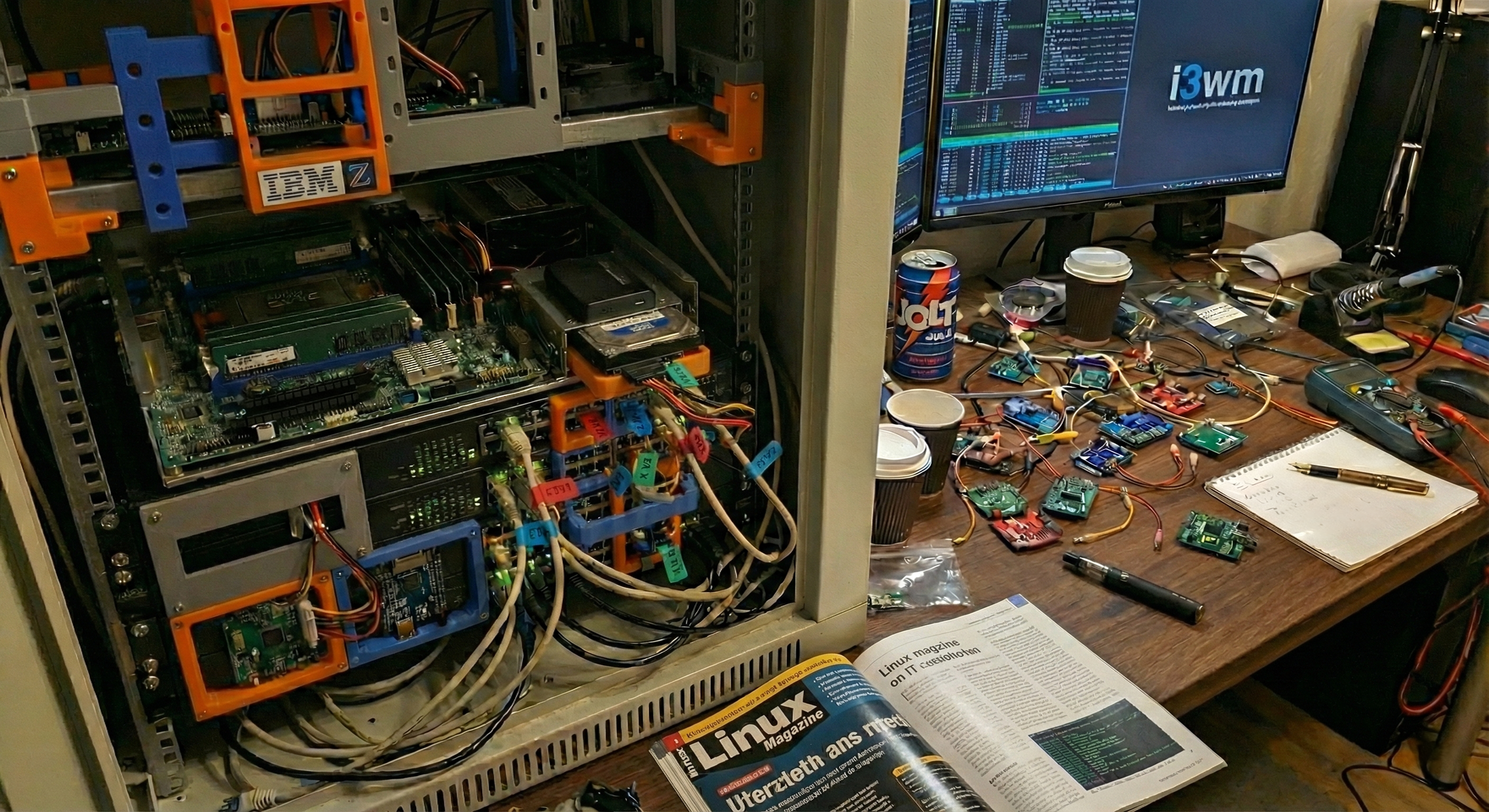
Q: With a playground that complex, you must see a lot of vulnerabilities. What do you think are the most underrated security aspects right now?
Wouter: "People still underestimate how much risk comes from inside their own stack. Everyone worries about firewall and perimeter exploits, but most real compromises come from trusted components behaving badly: dodgy Docker images, sloppy copy-paste configs from Stackoverflow, over-privileged containers, forgotten admin panels, IoT devices that phone home like it’s their full-time job, or even as simple as default passwords. Supply-chain trust, internal lateral movement, and the sheer amount of telemetry leakage in 'normal' devices are massively underrated. The weakest link usually isn’t your firewall, it’s probably the stuff you implicitly trust."
Q: So, what is the most important security aspect of your own home-lab?
Wouter: "Treating the LAN as hostile. That’s the core principle. Every device, VM, and container gets its own bubble: VLANs, strict firewall rules, and default-deny egress so things only talk with each other if they really must. I add some DNS filtering, local identity management like FIDO2 and short-lived SSH keys, and minimal privileges everywhere. This will significantly minimize the attack vectors available for script-kiddies and packet ninjas tripping every alarm on their way over the virtual fence into your beloved, valuable and private data. It’s less about building a fortress and more about assuming compromise and limiting the blast radius. Segmentation plus good observability covers the majority of realistic risks, especially around privacy and data exposure."
Want to work with our team?
At Neo Security, we're building a team of curious, hands-on engineers. Whether you're dealing with legacy systems or modern cloud infrastructure, we can help you understand the real risk. And fix it.